

The Federal Competition and Consumer Protection Act 2018 (FCCPA), enacted in 2019, governs merger review and approval in Nigeria. The Banks and Other Financial Institutions Act 2020
The Federal Competition and Consumer Protection Act 2018 (FCCPA), enacted in 2019, governs merger review and approval in Nigeria. The Banks and Other Financial Institutions Act 2020

The Supreme Court’s decision in Maryam Sanda v C.O.P1 (“Sanda’s case”) has reignited debate over whether the prerogative of mercy (“mercy”) may be exercised while a convict’s appeal is still pending. Rooted in the ancient royal prerogative2 and retained in sections 175 and 212 of the Constitution3, this executive power functions as a humane corrective to the criminal justice system,

On 24 June 2026, in London, GSMA launched its ‘Satellite Regulatory Playbook’ (the Playbook), a policy guide developed to assist governments and National Regulatory Authorities (NRAs) in designing regulatory frameworks capable of addressing the rapidly evolving satellite connectivity landscape. The GSMA, a global organisation representing the mobile communications ecosystem, including nearly 800 mobile operators and more than 300 companies across the wider technology sector, developed the Playbook

On 18 June 2026, the Honourable Minister of Finance and Coordinating Minister of the Economy, Taiwo Oyedele, issued the “General Transition Guidelines for the Tax Acts 2025” (the “Guidelines”).1 The Guidelines outline the operational rules for implementation of the recently enacted tax Acts: the Nigeria Tax Act, 2025, the Nigeria Tax Administration Act, 2025, the Nigeria Revenue Service (Establishment) Act, 2025, and

This article examines Nigeria’s legal and regulatory framework for the decommissioning and abandonment of oil and gas facilities, with particular focus on the obligations created by the Petroleum Industry Act 2021 and the supporting upstream, midstream and downstream regulations. It argues that decommissioning and abandonment is not merely a technical end-of-life exercise, but a continuing legal obligation involving regulatory
This article examines the implications of this transition for enterprises regulated by the Nigeria Export Processing Zones Authority (“NEPZA”) and the Oil and Gas Free Zones Authority (“OGFZA”). It considers the pre-reform legal position, the structural changes introduced by the NTA and NTAA, and how those changes affect NEPZA and OGFZA regulated

Quick reference guide enabling side-by-side comparison of local insights into corporate governance issues worldwide, including sources of rules and practice; responsible agencies and notable opinion formers; shareholder powers, decisions, meetings, voting, duties and liabilities; employee role in governance; corporate control issues; board structure and composition, duties, leadership, committees, meetings and evaluation; director and senior management remuneration; director protections; disclosure and transparency; hot topics, such as shareholder engagement, and sustainability, pay ratio and gender gap reporting; and other recent trends.
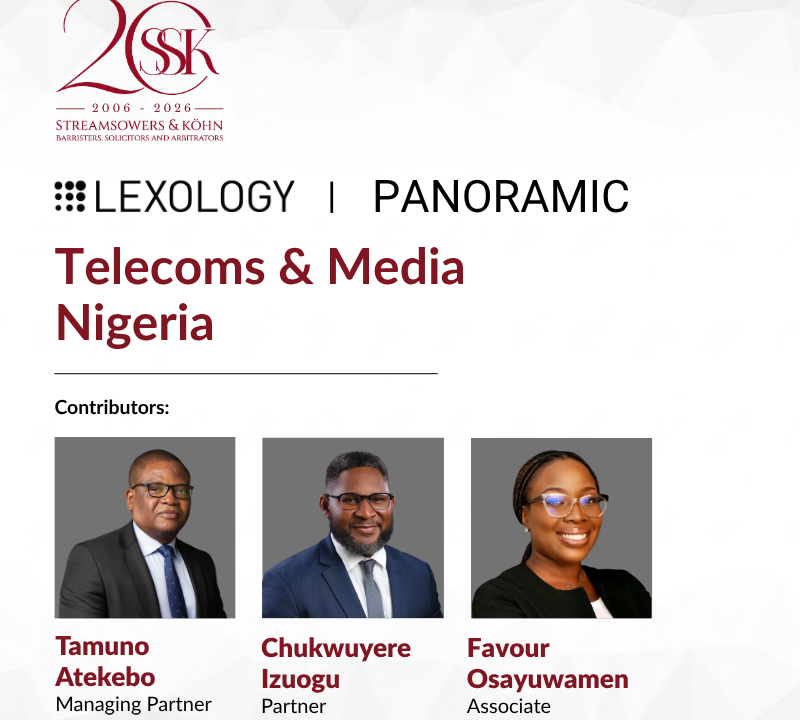
Nigeria’s communications sector is primarily regulated by the Nigerian Communications Act 2003 (NCA) and the Wireless Telegraphy Act 1966 (WTA). The NCA established the Nigerian Communications Commission (NCC), which is charged with the responsibility of regulating the communications sector

The interplay between limitation statutes and employment contracts in Nigeria has long generated doctrinal uncertainty. A recurring question in Nigerian jurisprudence is whether the limitation period prescribed by POPA 1 applies to claims arising from contracts of employment involving public authorities.

A court judgment that cannot be enforced is likely to be a pyrrhic victory, so the importance of enforcement cannot be overstated. Cross-border enforcement is a particularly complicated area of legal practice, requiring practitioners to navigate different legal systems, national laws and a range of international agreements and conventions.
Copyright © sskohn 2026 | Developed by Future Software Resources Ltd.
 852b Bishop Aboyade Cole St, Victoria Island, LagosBlock C Terrace 3, CT3, Lobito Crescent, Stallion Estate, Wuse II, Abuja77B Woji Road, GRA Phase II, Port Harcourtinfo@sskohn.com
PRACTICE AREAS
QUICK LINKS